
What is a trading journal, and how does it make you a better trader?
A trading journal is a record of the trades you take and what you were thinking when you took them. Kept consistently, it turns a blur of wins and losses into something you can actually learn from, and that steady feedback is what separates a trader who improves from one who just keeps trading.
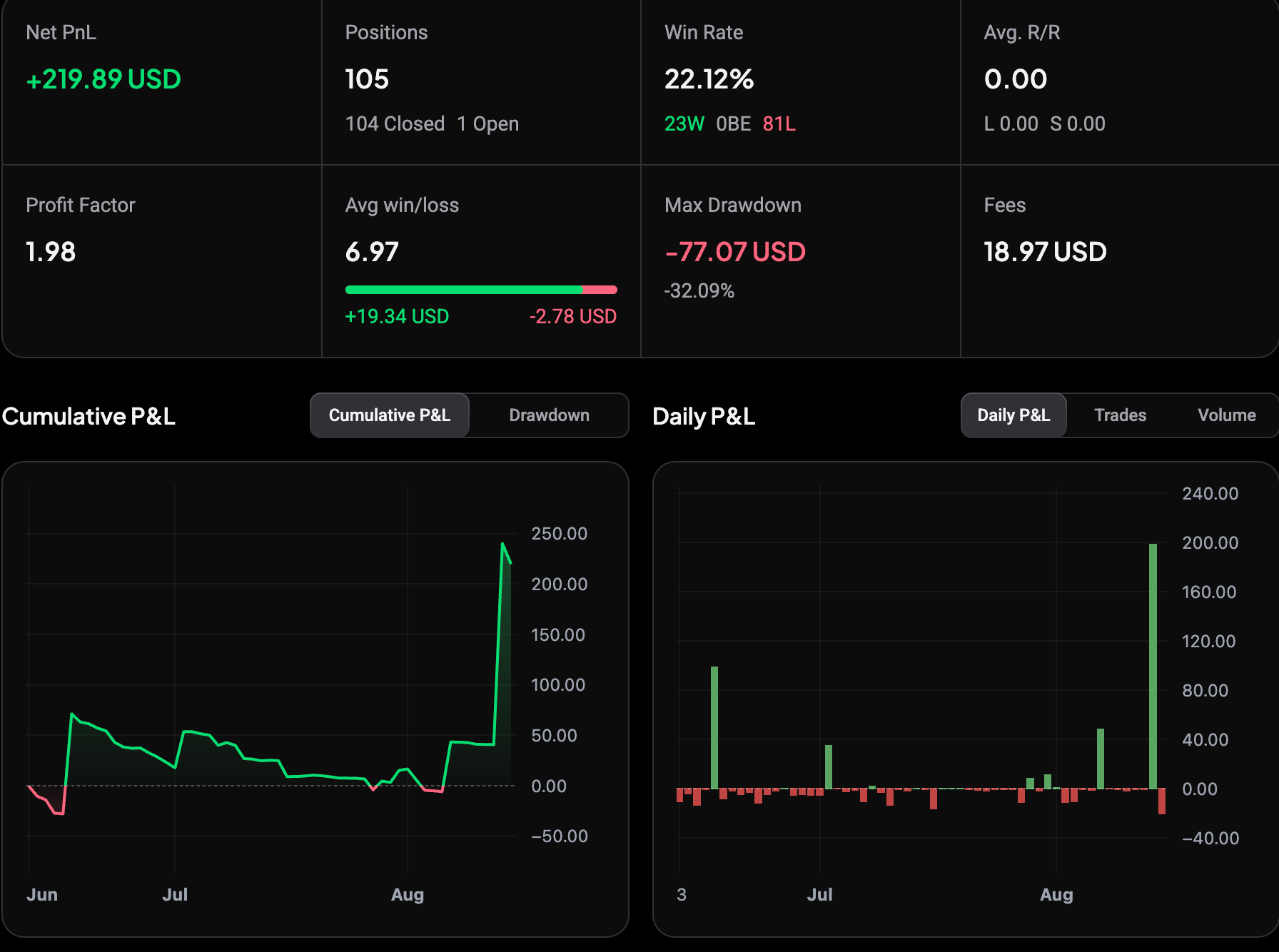 🔍 Click the image to see a larger version
What a trading journal is
A journal logs each trade: what you bought or sold, when, at what size, with what stop and target, and why you took it. In Altrady most of that is captured automatically from your closed positions. The part you add is the thinking: a rating of how you executed, the strategy you were following, tags for what happened, and a short note to your future self.
Why writing it down changes your trading
Memory is kind to us in the wrong ways. It remembers the one big win and quietly forgets the ten small losses that paid for it. A written record does not. Once your decisions are on the page, patterns you cannot feel in the moment become clear across fifty trades: the setup that keeps working, the hour of day that keeps costing you, the mistake you keep repeating. You cannot fix what you cannot see, and the journal is how you see it.
What to record for it to be useful
The mechanics (entry, exit, size, profit or loss) are captured for you. The parts worth adding yourself are the ones a report cannot infer:
- a rating of how well you executed, kept separate from whether the trade won
- the strategy or setup you were trading
- tags for what actually happened, including the honest ones like FOMO or a moved stop
- a short note on why you entered and what you would do differently
The honest labels are the ones that pay off later, because they are what let you put a number on a habit instead of a feeling.
Turning the record into better decisions
A journal is a feedback loop, not a scrapbook. The value comes from using it: review your closed trades regularly, look at what your own numbers say by market, side, time and tag, change one thing, then check whether the change shows up in the next batch of trades. Small, evidence-led adjustments compound over time, and that is the whole point of keeping the record.
How Altrady keeps the journal for you
Altrady does the tedious part automatically and gives you the tools for the rest:
- your closed trades arrive in the Journal ready to review, rate and tag: see review, rate and tag your trades
- the reports turn those entries into numbers you can read: see reading the Stats report and the breakdown reports
- strategies and risk rules turn lessons into a plan you can hold yourself to: see create and use a trading strategy
Still stuck?
If you are not sure where to begin, open the Journal and review your last few closed trades. The habit of doing it matters more than how deep you go. Reach out through support chat any time.